

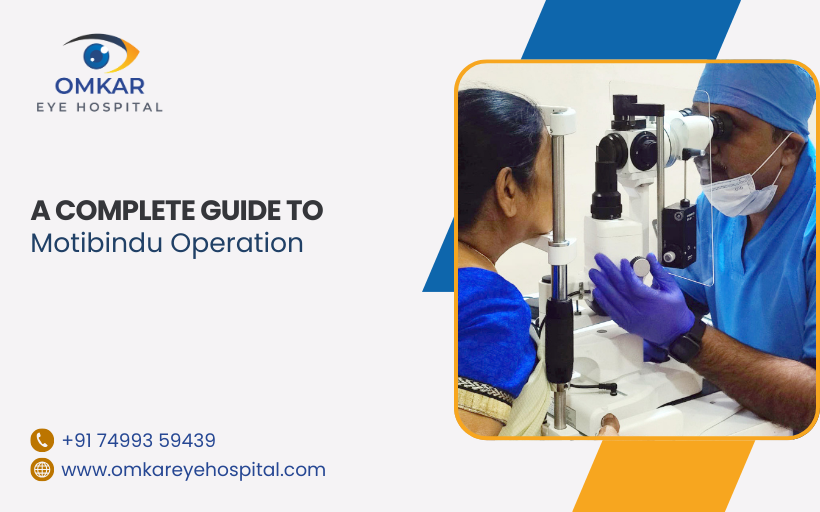
A Complete Guide to Motibindu Operation
Imagine trying to look through a window that has slowly turned foggy over the years. You clean your glasses, adjust the lighting, and even change your surroundings, but the blur remains. This is exactly how many patients describe their vision before undergoing a motibindu operation. The world doesn’t go dark suddenly; instead, clarity fades little by little.
For patients searching for reliable and ethical motibindu surgery, understanding the condition and the treatment options is the first step toward clear vision. At Omkar Eye Hospital, motibindu surgery in Chinchwad is approached with precision, experience, and patient education, because informed patients make confident decisions.
This detailed guide explains everything you need to know about motibindu: from what it is and when surgery becomes necessary, to costs, insurance coverage, recovery, and long-term outcomes. Whether you are a patient, caregiver, or someone seeking medical clarity, this guide is designed to answer real questions without unnecessary complexity.
What Is Motibindu in the Eye?
Motibindu is the common Indian term for cataract, a condition in which the natural crystalline lens of the eye becomes cloudy. Under normal circumstances, this lens is transparent and helps focus light sharply onto the retina. When a cataract develops, the clouding blocks light and scatters it irregularly, leading to blurred or dim vision.
Motibindu typically develops gradually and may affect one or both eyes. It is most commonly associated with aging, but it can also occur due to:
- Diabetes
- Prolonged steroid use
- Eye trauma
- Congenital causes (present since birth)
- Excessive UV exposure
Patients often report symptoms such as difficulty reading, poor night vision, glare from headlights, fading of colors, and frequent changes in spectacle power.
What Is Motibindu Operation?
Many patients ask, what is motibindu operation, and whether it is complicated or risky. In simple terms, a motibindu operation is a surgical procedure in which the cloudy natural lens is removed and replaced with a clear artificial intraocular lens (IOL).
The surgery is typically:
- Performed under local anesthesia
- Completed within 15–30 minutes
- Painless during the procedure
- Done as a day-care surgery
Modern cataract surgery does not involve stitches in most cases, and patients usually return home the same day. Vision improvement often begins within a few days, depending on the type of surgery and lens implanted.
At Omkar Eye Hospital, the focus is on selecting the most appropriate surgical method and lens based on the patient’s eye condition, lifestyle, and visual needs.
When Is Motibindu Surgery Required?
Motibindu surgery is recommended not based on age, but on how much the cataract interferes with daily life. Surgery becomes necessary when:
- Vision affects reading, driving, or work
- Glasses no longer improve clarity.
- Glare causes discomfort, especially at night.
- The cataract prevents examination or treatment of other eye diseases.
Delaying surgery for too long can sometimes make the cataract harder, which may increase surgical complexity. Therefore, timely evaluation is important.
Types of Motibindu Eye Surgery
There are different techniques for motibindu eye surgery, and the choice depends on cataract density, eye health, and the surgeon's expertise.
1. Phacoemulsification
This is the most commonly performed technique. Ultrasound energy is used to break the cataract into small pieces, which are then removed through a tiny incision.
Advantages:
- Faster recovery
- Minimal incision
- No stitches in most cases
2. Manual Small Incision Cataract Surgery (MSICS)
This technique is useful for very dense cataracts and is widely practiced in India with excellent outcomes.
Advantages:
- Cost-effective
- Suitable for advanced cataracts
- Reliable visual results
At Omkar Eye Hospital, the surgeon decides the safest and most effective approach after a thorough eye examination.
Motibindu Operation Cost: What Patients Should Know
One of the most common concerns is motibindu operation cost, and understandably so. The cost can vary depending on several factors:
- Type of surgery
- Type of intraocular lens (IOL)
- Complexity of the cataract
- Presence of other eye conditions
Motibindu Operation Cost in Pune
For patients seeking clarity on the motibindu operation cost in Pune, it is important to understand that pricing varies. In general, fees may range from basic packages to premium options depending on lens choice and surgical technique.
Omkar Eye Hospital follows transparent pricing policies and explains all cost components upfront so that patients can make informed decisions without surprises.
Is Motibindu Covered by Insurance?
A frequently asked question is: Is Motibindu covered by insurance?
Yes, in most cases, cataract surgery is covered under health insurance policies. However, coverage depends on:
- The insurance provider
- Policy terms and waiting periods
- Type of lens selected
Basic cataract surgery is usually covered, while premium lenses may involve additional expenses. The hospital administrative team assists patients with insurance documentation and pre-authorization whenever required.
Pre-Surgery Evaluation and Preparation
Before scheduling surgery, a detailed eye evaluation is essential. This includes:
- Visual acuity testing
- Eye pressure measurement
- Retina examination
- Biometry for lens power calculation
Patients may be advised to control systemic conditions like diabetes or hypertension before surgery. Preoperative instructions are explained clearly to ensure safety and optimal outcomes.
What Happens During the Motibindu Operation?
The actual motibindu operation is usually straightforward:
- Local anesthesia is administered
- A small incision is made.
- The cloudy lens is removed.
- An artificial lens is implanted.
- The incision seals naturally.
The patient remains awake but comfortable throughout the procedure.
Recovery After Motibindu Surgery
Recovery is generally smooth if post-operative instructions are followed.
Patients are advised to:
- Use prescribed eye drops regularly
- Avoid rubbing the eye.
- Keep water and dust away from the operated eye.
- Attend follow-up visits
Most patients notice improvement in vision within a few days, with stabilization over a few weeks.
Why Choose Omkar Eye Hospital for Motibindu Surgery in Chinchwad?
Choosing the right hospital is as important as choosing the surgery itself. Omkar Eye Hospital is trusted by patients across Chinchwad and Pune for its patient-centered approach.
Key reasons patients choose Omkar Eye Hospital include:
- Experienced ophthalmologists
- Ethical treatment recommendations
- Clear communication with patients
- Personalized surgical planning
- Focus on safety and outcomes
The hospital emphasizes long-term visual health, not just surgical success.
Life After Motibindu Surgery
After successful surgery, patients often experience:
- Improved clarity and brightness
- Better color perception
- Reduced dependence on glasses (depending on lens type)
Regular eye check-ups remain important, especially for patients with diabetes or other eye conditions.
Wrapping Up
Motibindu is a common yet highly treatable eye condition. With timely diagnosis and the right surgical approach, patients can regain clear and comfortable vision. For those seeking reliable motibindu surgery in Chinchwad, Omkar Eye Hospital offers experience-driven care with transparency and trust.
Understanding what is motibindu operation, knowing the motibindu operation cost, and being informed about insurance coverage helps patients approach surgery with confidence rather than fear. Clear vision is not just about seeing better; it’s about living better.
Frequently Asked Questions
1. Is motibindu surgery painful?
Motibindu surgery is not painful. Local anesthesia ensures comfort during the procedure, and most patients experience only mild irritation afterward, which settles with prescribed medication.
2. How long does it take to recover after motibindu operation?
Initial recovery usually occurs within a few days. However, complete stabilization of vision may take 3–4 weeks. Following post-operative instructions plays a key role in smooth recovery.
3. Can motibindu come back after surgery?
No, motibindu does not return once the cloudy lens is removed. In some cases, a thin membrane behind the lens may become cloudy months or years later, which can be treated easily with a simple laser procedure.